
8 Reasons To Avoid Blown-In Cellulose
Many homeowners are attracted to the lower upfront cost of blown-in cellulose insulation, but those early savings can lead to costly issues over time. At Garrity Insulation, we have more than 30 years of experience insulating homes across New Mexico, and we’ve never recommended cellulose as an option.
Blown-in cellulose insulation is often promoted as an affordable solution, but it can come with serious drawbacks. From moisture absorption and mold growth to settling and potential fire risks, understanding the dangers of blown-in insulation is essential—especially for homeowners in Albuquerque, NM where climate conditions can impact performance.
“If I wouldn’t put cellulose insulation in my home, I certainly won’t put it in yours.“
– Mark Garrity, Owner Garrity Insulation Inc.
What is blown-in cellulose insulation?
Blown-in cellulose insulation is made from recycled paper products, such as newspapers and cardboard. These items are naturally flammable and must be treated with fire-retardant chemicals to improve their resistance to burning.
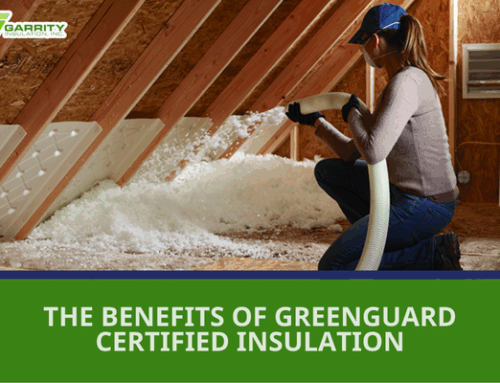
Blown-in cellulose insulation is installed by blowing the loose fibers into the desired area. It is often used in attics and wall cavities.
Why should I avoid blown-in cellulose?
 Fire Hazards Associated with Cellulose Insulation – Fire-retardant chemicals make up 20% of the cellulose insulation final product, however, this treatment does not make the insulation “non-combustible” or smolder resistant. John G. Degenkolb, a fire protection engineer, states in an issue of Fire Journal, “Even the best of these flame-retardant cellulosics will begin to smolder when heated to approximately 450°F. When smoldering once begins, it is most difficult to extinguish. It reacts like a smoldering cotton mattress. The ordinary application of water or other extinguishing agent is ineffective. The material must be carefully pulled apart in its entirety, and each parcel extinguished separately.” According to the Insulation Institute, the Consumer Products Safety Commission requires cellulose manufacturers to warn customers that products present a fire hazard.
 Moisture Issues and Risk of Mold Growth – Because blown-in cellulose is made of paper products, it soaks up any and all moisture in the insulated area. A roof leak, pipe leak or high humidity can cause water to infiltrate the insulation, and insulated areas take a long time to dry back out. As a result, the blown-in cellulose insulation can become an incubator for mold and mildew.
Settling and Compaction Over Time– Blown-in cellulose insulation is designed to fill spaces and gaps, but cellulose’s ability to settle into any shape or area can cause problems. Cellulose insulation packs down easier than other insulation types, which leaves gaps and spaces.
Reduced R-Value and Energy Efficiency Loss – Over time, as blown-in cellulose settles or compacts, it leaves gaps at the top, reducing its effectiveness. In addition, because it’s susceptible to moisture, blown-in cellulose runs the risk of being wet, and wet insulation will have a drastically lower R-value, which reduces its effectiveness.
Messy Installation and Airborne Dust – The loose cellulose fibers blown into a home during the insulation process produce significant dust during installation, which can create a mess for homeowners.
Potential Allergy and Irritation Concerns – For individuals who are allergic or sensitive to newspaper ink or chemical fire retardants, blown-in cellulose can cause irritation. Blown-in cellulose’s potential for mold and mildew can also lead to health issues and discomfort.
Excess Weight Can Damage Drywall and Ceilings – The heavy weight of blown-in cellulose can lead to ceiling or drywall damage. The weight of cellulose necessary to meet building code can lead to popped nails, sagging sheet rock, or ceiling damage.
Difficult Removal After Water or Mold Damage – If you have a burst water pipe or other disasters in your home, blown-in cellulose can be very difficult to clean. According to the home restoration experts at SeviceMaster, one blown-in cellulose becomes wet, it becomes very heavy, and difficult to clean. Even a small area of water-damaged blown-in cellulose may require completely re-insulating the area.
Why should I use fiberglass insulation instead?
At Garrity Insulation, instead of blown-in cellulose, we recommend using fiberglass insulation. Fiberglass insulation offers several advantages that make it a popular choice for many applications:
Why choose the experts at Garrity Insulation?
Protect your home from the risks of blown-in cellulose insulation. Garrity Insulation offers safer, longer-lasting solutions like fiberglass and spray foam. Get your FREE quote today.