FREQUENTLY ASKED QUESTIONS
Residential Insulation FAQ
How do I know if my home needs more insulation?
Many homes in the United States are under-insulated. One of the most noticeable signs that your home may need additional insulation is how frequently your heating and cooling systems have to run.
If your air conditioner or heater seems to run constantly, certain rooms are difficult to keep comfortable, or your energy bills are higher than expected, inadequate insulation could be part of the problem.
Adding insulation to your attic can help reduce heating and cooling costs, improve energy efficiency, and keep your home more comfortable year-round.
What is the difference between cellulose and fiberglass insulation?
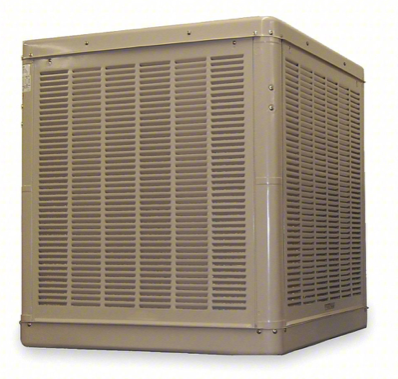
Cellulose and fiberglass are both commonly used to insulate attics and other areas of a home. Cellulose is often offered as a lower-cost alternative to fiberglass, but the two materials have important differences.
Cellulose
- Primarily made from recycled paper products
- Requires chemical fire-retardant treatment
- Can settle over time
- Can absorb and retain moisture
- Heavier than fiberglass, which can add additional weight to ceiling assemblies
- Thermal performance can be affected by settling and moisture
Fiberglass
At Garrity Insulation, we use high-quality fiberglass insulation products
- Fiberglass insulation is made from silica sand and glass
- Non-combustible: Knauf loose-fill fiberglass is naturally non-combustible and carries a Class A fire rating without requiring added fire-retardant chemicals.
- GREENGUARD Gold Certified: Knauf fiberglass insulation products are available with GREENGUARD Gold certification for low chemical emissions.
- Formaldehyde-free: Knauf fiberglass insulation is validated as formaldehyde-free.
- Resists settling: Loose-fill fiberglass products are engineered to maintain their installed performance over time.
- Moisture resistant: Fiberglass does not readily absorb moisture into the glass fibers and is highly resistant to mold growth.
- Long-lasting performance: Fiberglass products are designed to provide dependable thermal performance.
Want to learn more about the dangers of cellulose insulation? Read our blog, 8 Reasons to Avoid Blown-In Cellulose, to learn more about the risks and considerations.
Does my home qualify for rebates from New Mexico Gas Company and PNM?
New Mexico Gas Company
New Mexico Gas Company offers incentives for qualifying insulation upgrades, making it easier for homeowners to improve energy efficiency and comfort while offsetting a portion of the project cost.
Current incentives include:
Attic or Roof – Existing Insulation of R-11 or Less
Customers may qualify for a rebate of 40% of the project cost, up to $800, when qualifying insulation is added.
Attic or Roof – Existing Insulation Between R-12 and R-19
Customers may qualify for a rebate of 40% of the project cost, up to $500, when qualifying insulation is added.
Crawl Space Insulation
Customers may qualify for a rebate of up to $200 when qualifying R-19 or greater insulation is installed in an eligible crawl space.
Eligibility requirements and rebate amounts are subject to change and available while funds last. Garrity Insulation can help determine whether your home qualifies and guide you through the rebate process.
PNM
PNM also offers incentives for qualifying insulation upgrades. Homes with R-19 or less existing insulation must add R-19 or more to qualify.
Home With an Evaporative Air Unit (The home must have a flat roof with electric heat)
Customers may qualify for a rebate of 5% up to $100.
Home With a Refrigerated Air Unit
Customers may qualify for a rebate of 10% up to $200.
A PNM Home Energy Checkup must be completed within 30 days of the install to qualify.
Want to learn more about available insulation rebates and eligibility requirements? Visit our Insulation Rebates page for additional information.
What is an attic baffle?
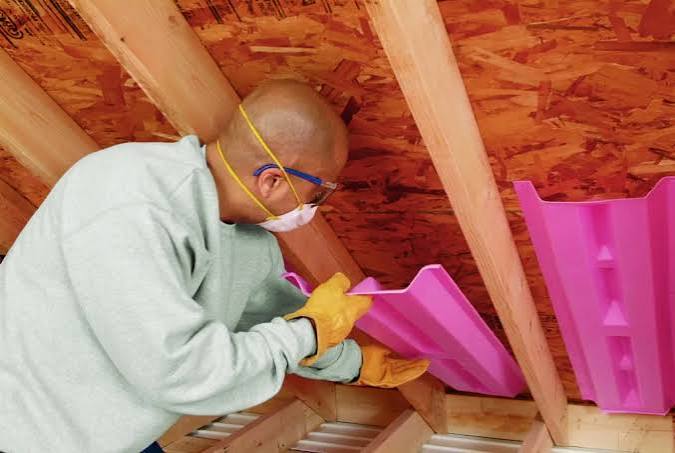
Attic baffles, also known as rafter vents or insulation chutes, are channels installed between roof rafters near the eaves of an attic.
Baffles help maintain an unobstructed path for ventilation from the soffit vents into the attic while preventing loose-fill insulation from blocking airflow.
Proper attic ventilation can help control heat and moisture, protect the roof assembly, and allow your insulation system to perform as intended.
What is attic air sealing, and does my home need it?
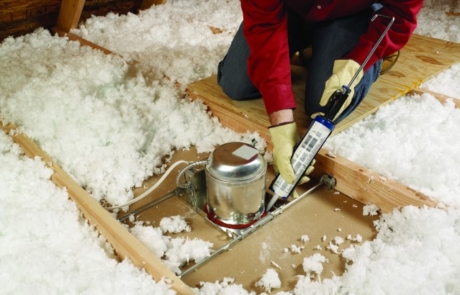
Air sealing is the process of identifying and sealing gaps, cracks, penetrations, and other openings that allow conditioned air to escape from your home into the attic.
Common leakage areas in the attic are sealed with appropriate materials such as caulk or expanding spray foam before new insulation is installed.
Air sealing can help reduce energy loss, minimize drafts, improve comfort, and allow your insulation to perform more effectively. For these reasons, Garrity Insulation highly recommends evaluating your attic for air sealing before upgrading the insulation
Learn more about the benefits of attic air sealing and how it can improve your home's comfort and energy efficiency.
Commercial Insulation FAQ
What experience does Garrity Insulation have with commercial insulation applications?
Garrity Insulation has proudly served New Mexico for over 35 years, with extensive experience in commercial construction and insulation applications.
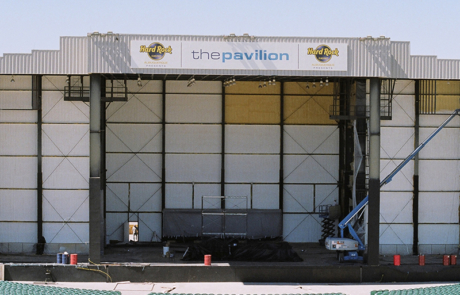
We've worked on a wide variety of projects, including medical offices, restaurants, schools, concert and event venues, breweries, warehouses, commercial water tanks, and many other specialized applications.
Our commercial team has the knowledge and experience to work with projects of virtually any size or complexity. From insulation and air barriers to firestopping, joint sealants, and specialty applications, Garrity Insulation provides professional solutions designed to meet each project's specific requirements.
What is vinyl facing? Does my project need it?
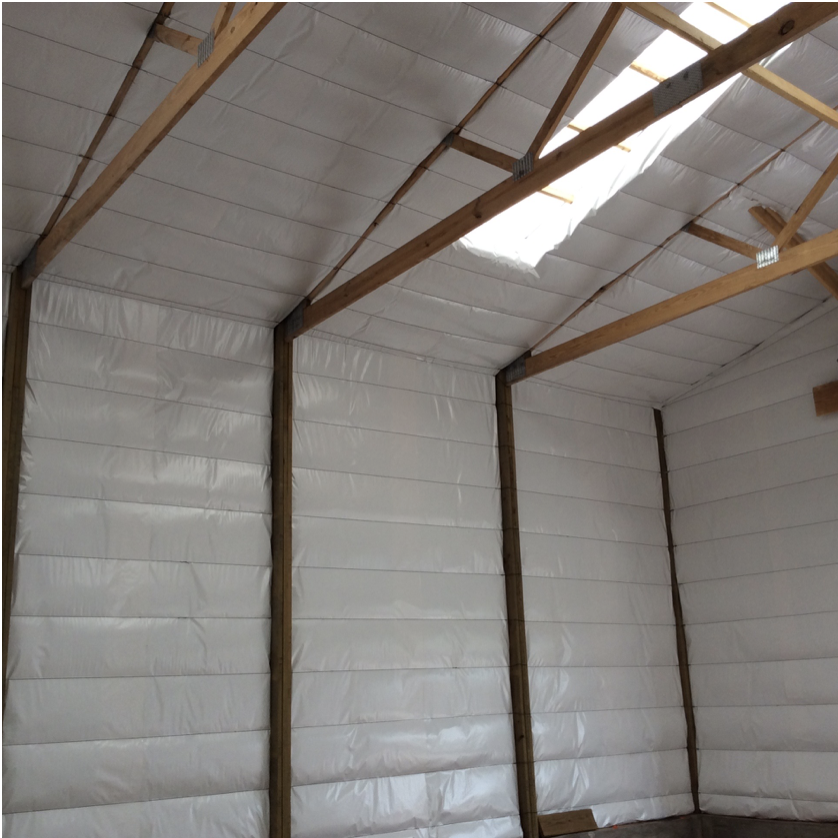
Vinyl facing is a durable facing material applied to fiberglass insulation and is commonly used in metal buildings, warehouses, pole barns, and other commercial or industrial structures.
Depending on the product and application, vinyl facing can provide several benefits:
- Creates a clean, finished interior appearance
- Helps control water vapor
- Protects the insulation
- Provides additional durability during and after installation
- Allows insulation to remain exposed when an approved facing system is used
Vinyl-faced insulation is particularly useful in metal building roofs and walls where drywall or another interior finish will not be installed. In these applications, the facing creates a clean, durable interior surface.
Unlike standard kraft-faced insulation, which generally cannot be left exposed, certain vinyl-facing systems are designed and rated for exposed applications. The appropriate product should always be selected based on the building design and applicable fire and building codes.
What is mineral wool? How is it different from fiberglass?
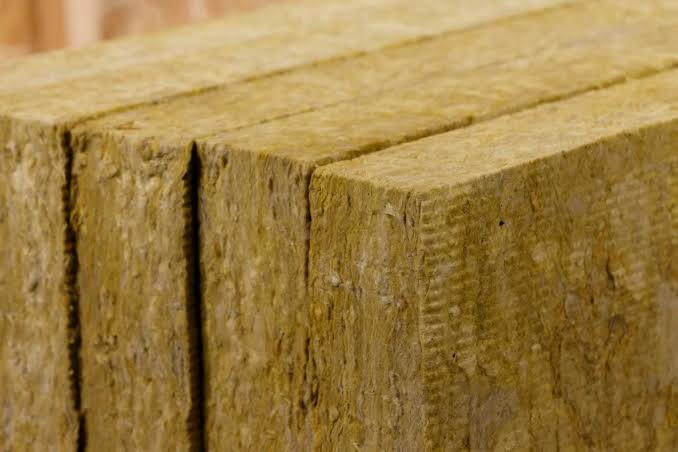
Mineral wool is a dense thermal and acoustic insulation typically manufactured from spun natural rock or recycled slag.
Although both mineral wool and fiberglass provide excellent insulation, they have different characteristics that can make one material better suited to a particular application.
Mineral Wool
- Made primarily from rock or slag
- Dense and rigid
- Excellent fire resistance
- Provides strong sound-dampening performance
- Offers a high R-value per inch
- Highly resistant to moisture
- Heavier than fiberglass
- Generally more expensive
Fiberglass
- Made primarily from glass and sand-based materials
- Lightweight and flexible
- Excellent thermal performance
- Naturally non-combustible
- Available in a wide variety of applications and R-values
- Typically more economical than mineral wool
- Easier to source and install for many common applications
Mineral wool is often selected when enhanced fire resistance, sound control, or higher thermal performance within a limited wall depth is important. Fiberglass remains an excellent, cost-effective choice for a wide range of residential and commercial applications.
Spray Polyurethane Foam (SPF) FAQ
What is spray polyurethane foam?
Spray polyurethane foam, commonly known as spray foam insulation, is a high-performance insulation material that expands after application to fill gaps, cracks, and irregular spaces.
Because it expands and adheres directly to the surfaces where it is applied, spray foam can provide both insulation and an effective air barrier.
Spray foam is available in two primary types: open-cell and closed-cell foam. Each offers different performance characteristics and is suited to different applications.
What is the difference between closed-cell and open-cell spray foam?
The primary differences between closed-cell and open-cell spray foam are their density, R-value, moisture characteristics, rigidity, and cost.
Closed-Cell Spray Foam
- Dense and rigid
- Higher R-value per inch
- Provides excellent air sealing
- Highly resistant to water
- Can provide vapor-control benefits at appropriate thicknesses
- Adds rigidity to certain assemblies
- Ideal when space is limited or greater moisture resistance is required
Open-Cell Spray Foam
- Lightweight and flexible
- Lower R-value per inch than closed-cell foam
- Excellent air-sealing properties
- Vapor permeable
- Excellent for sound absorption
- Expands significantly to fill cavities
- Typically less expensive than closed-cell foam
Should I use closed-cell or open-cell spray foam for my project?
The right spray foam depends on the location, building design, moisture conditions, energy goals, and budget.
Closed-cell spray foam is often a good choice for exterior walls, roof assemblies, metal buildings, and areas where space is limited or greater moisture resistance and R-value per inch are important.
Open-cell spray foam can be an excellent option for certain interior wall, attic, and sound-control applications where flexibility, air sealing, sound absorption, and cost are priorities.
Every building is different. Garrity Insulation can evaluate your project and recommend the insulation system that best fits the application, performance requirements, and budget.